

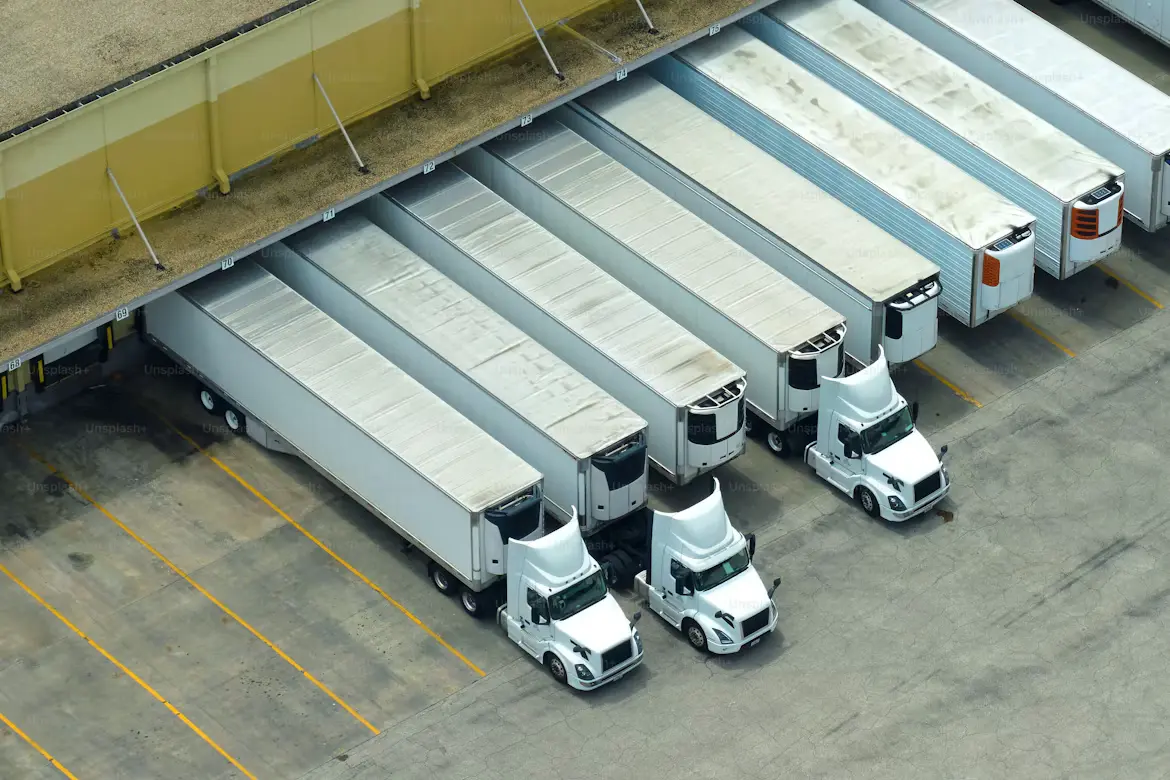
Picture a logistics business that priced a twelve-month contract with a major customer in January. Fuel was stable, margins looked reasonable, and the rate seemed competitive. By March, diesel had moved fifteen percent. The contract rate stayed the same. The fuel cost did not.
Nobody in that business decided to take on fuel price risk. Nobody signed up to absorb a fifteen percent cost increase mid-contract. It happened because the business made a completely normal commercial decision, agreeing a customer rate before knowing what the input cost would be for the life of that agreement, and the market moved in the window between.
That is commodity price risk. And some version of that scenario plays out across haulage companies, manufacturers, farms and construction businesses every year, usually without the word commodity appearing anywhere in the conversation.
Why it affects more businesses than they realise
The businesses that think most carefully about commodity price risk tend to be large organisations with dedicated treasury functions. Everyone else tends to discover it when a cost moves faster than a contract, a budget or a pricing decision can accommodate.
That is not because smaller businesses are poorly run. It is because commodity price risk does not announce itself. It builds up gradually, across multiple inputs, over time, in a way that is easy to absorb quarter by quarter until it is not.
A fuel cost that rises five percent is manageable. A fertiliser cost that rises ten percent in the same period is manageable. A grain price that falls while both of those are rising starts to create real pressure on a farming margin. A steel price that climbs fifteen percent while a manufacturer is mid-way through a fixed-price customer contract is a different problem again.
The cumulative effect of several commodity movements happening at the same time is often what creates the commercial damage, not any single change taken in isolation. And because each movement can be absorbed or explained away individually, the full picture tends to remain invisible until it appears in year-end results or a contract conversation that suddenly becomes uncomfortable.
What commodity price risk actually is
Commodity price risk is the degree to which changes in raw material or input prices affect a business’s costs, revenues, margins or ability to plan. It is not a niche financial concept. It is a practical commercial reality for any business whose cost base includes materials or inputs priced by markets it does not control.
Fuel is the most obvious version. But steel, aluminium and copper prices move for reasons entirely unrelated to the decisions of the businesses that buy them, and those movements flow directly into manufacturing costs and procurement budgets. Fertiliser, feed and grain prices do the same for farming operations. Energy prices affect almost every business in some form.
In each case the risk is not created by a decision the business made. It is inherited through the normal course of buying inputs and selling outputs in markets that move independently of each other.
The three ways it shows up
Commodity price risk tends to appear in three distinct forms. Understanding which one is affecting a business changes what can be done about it.
Cost exposure
The most visible form. When input prices rise, costs rise. For businesses on thin margins or under fixed-price contracts with customers, there is limited room to recover that increase. The exposure sits in the gap between what the market charges for inputs and what the business can pass on to its own customers.
Consider a fleet spending £50,000 a month on diesel. A fifteen percent fuel price increase adds £90,000 to annual operating costs. If customer contracts were priced at the old fuel level and carry no surcharge mechanism, that £90,000 comes out of margin rather than being recovered downstream. The business did not choose to absorb it. It simply had no structure in place to avoid it.
Revenue exposure
Less obvious but equally significant, particularly in agriculture. A farm’s revenue depends on the price it receives for grain, livestock or dairy at the point of sale. When those prices fall between the production decision and the point of sale, the revenue the farm planned around does not arrive. The input costs were already committed. The margin they were built on no longer exists.
Revenue and cost exposure can move against a business at the same time, compressing margins from both sides simultaneously. This is what makes farming businesses particularly vulnerable in volatile years, and why understanding both sides of the exposure picture matters as much as understanding either side individually.
Planning and forecasting exposure
The third form is the most underappreciated. When commodity prices are volatile, the assumptions that underpin budgets, tenders and commercial decisions become unreliable faster than the planning cycle can respond.
A manufacturer that builds an annual budget on a steel price that is thirty percent higher by the second quarter is not just facing a cost problem. It is facing a decisions problem. Every pricing commitment, every customer quote, every investment case that was built on those assumptions is now wrong. The financial loss matters. The planning paralysis that follows often matters more.
Planning exposure shows up as tenders priced on assumptions that no longer hold, growth plans delayed because the cost base is too uncertain to commit against, and management time spent revisiting decisions that should have been settled months earlier.
| Type of Exposure | What It Affects | Common Examples |
| Cost exposure | Operating costs, margins, contract profitability | Fuel for haulage and construction. Steel and aluminium for manufacturers. Fertiliser and feed for farms |
| Revenue exposure | Income, margin per unit, seasonal profitability | Grain selling prices for arable farms. Dairy commodity prices for dairy producers |
| Planning exposure | Budgets, forecasts, pricing confidence, investment decisions | Any business making forward commitments based on commodity cost assumptions that prove wrong |
| The three types of exposure can and do occur simultaneously. A farm facing rising input costs, falling output prices and a budget built on assumptions that no longer hold is experiencing all three at once. Understanding which form is driving the most pressure is the starting point for knowing what to do about it. |
What commodity price risk management actually means
This is where most explanations of commodity risk management lose the reader, because they jump to instruments and products before the underlying logic is clear. So it is worth being precise about what risk management in this context actually involves.
It is not primarily about hedging. Hedging is one tool within a broader set of practices. The more useful definition is this: commodity price risk management is the process of understanding what market movements would mean for a business, deciding how much of that risk the business is willing to carry, and taking deliberate steps to manage the portion it is not.
That process has three stages. Most businesses that struggle with commodity price risk are missing at least one of them.
First. Understand the exposure
Most businesses know their commodity spend in aggregate. Far fewer have mapped out what different price movements would actually mean for their costs, margins and planning. Understanding exposure means going beyond tracking spend. It means knowing which parts of the business are most sensitive to which commodity movements, how quickly a price change flows through to commercial results, and what the combined effect of several movements at once would look like.
For a transport business, that means understanding not just total fuel spend but which contracts carry the most exposure, which surcharge mechanisms are effective and which are not, and what a fifteen percent fuel price increase would do to the forward order book.
For a manufacturer, it means knowing which raw materials represent the most significant share of cost, how quickly supplier quotes track market price changes, and whether current customer pricing would hold if material costs moved by ten or twenty percent.
For a farm, it means mapping input cost exposure across fuel, fertiliser and feed alongside revenue exposure from output prices, and understanding how those can compound against each other in the same season.
The information required to answer these questions almost always exists within the business already. The gap is usually in pulling it together into a single picture rather than leaving it dispersed across procurement data, budget assumptions and contract terms that nobody has connected.
Second. Decide how much risk to carry
Once exposure is understood, the business can make a deliberate decision about how much of it to hold. This is not a binary choice between full exposure and full protection. It is a judgment about risk appetite, commercial context and what level of certainty is worth paying for.
A business with strong margins, flexible customer pricing and short forward commitments may be comfortable carrying most of its commodity price exposure. A business with thin margins, fixed-price customer contracts and long forward commitments faces a different calculation entirely.
The point of this stage is not to arrive at the right answer. It is to make the decision deliberately, with the exposure understood, rather than by default. Most businesses that carry more commodity price risk than they should do not make an active choice to do so. They simply never make any choice at all.
Third. Manage the portion that remains
The tools available for managing commodity price exposure vary depending on the commodity, the business type and the scale of the exposure. Some businesses improve their position through better contract structures with customers, surcharge mechanisms that allow input cost movements to be passed through, or supply agreements that provide greater certainty over a defined period. Others use financial instruments such as fixed-price strategies or hedging to manage a portion of their input cost exposure in advance.
None of these approaches eliminates commodity price risk entirely, and none of them should be evaluated against the standard of achieving the lowest possible cost. The objective is not to beat the market. It is to ensure that the level of uncertainty the business is carrying is a deliberate choice rather than an accidental one, and that the exposure that remains is proportionate to the margins available to absorb it.
| The businesses that manage commodity price risk well are not necessarily the most sophisticated. They are the ones that understand their exposure clearly, have decided how much of it they are willing to carry, and have made that decision before market conditions forced the question. |
Why the interconnection of markets makes this harder than it used to be
Commodity markets have always moved. What has changed is the speed and breadth of those movements and how frequently multiple commodity prices move at the same time in response to the same underlying event.
A geopolitical disruption in a major energy-producing region affects oil prices within hours. Those prices feed into diesel, fertiliser, petrochemicals and freight costs within days. A disruption to grain supply in one part of the world feeds through to animal feed prices, livestock margins and food manufacturing costs across multiple sectors simultaneously.
This interconnection means that a business facing pressure on one input is now more likely than it used to be to face pressure on several others at the same time. The compound effect of that changes the commercial planning problem considerably and makes the gap between businesses that understand their exposure and those that do not more consequential than it has ever been.
Where to start
The starting point is not a financial product or a trading strategy. It is a clearer picture of the exposure already being carried.
That means working through a few straightforward questions. Which commodity inputs represent the most significant share of the cost base? What would happen to margins if each of those inputs moved by ten, fifteen or twenty percent? Are there customer contracts or pricing structures in place that limit the ability to recover those increases? How far ahead does the business commit to costs or revenues before those commitments can be repriced?
The answers are almost always available within the business. The work is in connecting them. And once the exposure picture is clear, the question of what to do about it tends to answer itself far more readily than it does when the exposure is still dispersed across systems and assumptions nobody has examined together.
That is where commodity price risk management actually begins. Not with an instrument or a strategy, but with the discipline of understanding what the business is already carrying.
Speak to the Attara team
If you would like to understand your own commodity price exposure more clearly, the Attara team works with businesses across fuel, agriculture and metals to map exposure, improve planning confidence and consider the options available. Get in touch to start the conversation.
