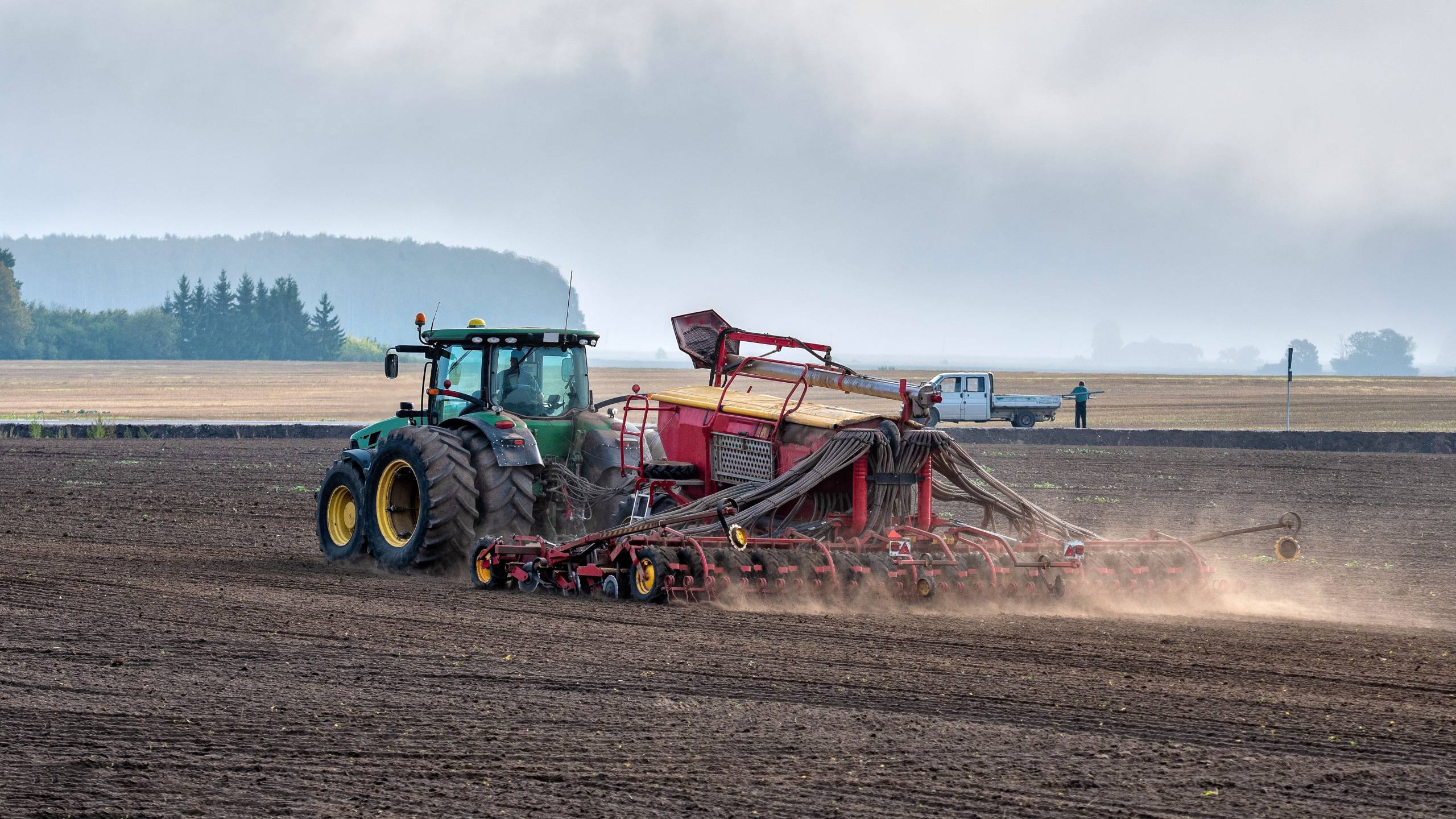
British arable farmers are making planting decisions right now. The costs attached to those decisions (diesel, fertiliser, haulage) are being set in real time by a conflict unfolding thousands of miles away.
This reflects how connected modern commodity markets are, and the extent to which they are influenced by global energy supply chains.
For a sector already facing strong headwinds, the timing could barely be worse, and for most farms, the challenge is not just rising costs, but understanding how those costs move together.
Not sure which commodities you’re most exposed to? The Explore Zone can map your risk exposure across your inputs and outputs before you read on.
What is driving UK farm input costs up right now?
Oil prices have risen sharply as a result of the US-Iran conflict which began in late February. In turn, this has pushed up energy and gas prices across the board.
Since UK arable farming is heavily mechanised with tractors, combine harvesters, grain dryers and automated irrigation, operating costs skyrocket as soon as diesel prices do. However, oil price spikes don’t just push up fuel for farmers; they push up food production costs too.
Gas is the primary ingredient in nitrogen fertiliser production, which is an enormously energy-intensive process. When oil prices move, gas follows and so do fertiliser prices, all in a matter of weeks.
Meanwhile, diesel and haulage costs rise directly, and grain prices, which track global energy markets, shift at the same time. Farmers find themselves dealing not with one problem, but rather four or five at once across commodities all moving in the same direction.
With severe disruption set to continue in the Strait of Hormuz, the chokepoint that carries around a fifth of global oil and gas shipments, farmers remain exposed to international shocks and severe supply chain volatility for the foreseeable, and pressures are likely to prolong after the current conflict subsides.
Why is the Middle East crisis a fertiliser problem too?
Fertiliser prices are rising significantly due to the current energy surge, leading farmers to reassess the financial viability of planting new crops.
According to CNBC, around one-third of all global seaborne fertiliser trade passes through the Strait of Hormuz. Analysts have reported the cost of granular urea jumping from around $400–490 per metric tonne before the conflict to around $700, a move of up to 75% in a few weeks. UK ammonium nitrate prices are already running £50 per tonne higher year-on-year.
Critically, this is hitting at the worst possible time in the agricultural calendar. Spring is when nitrogen fertiliser demand peaks, cereals, oilseed rape, and grass all require application during this window to support yield. There is limited flexibility in that timing. Unlike potash or phosphates, which can be managed across seasons, nitrogen has to reach the crop at the right growth stage or yields suffer directly.
For UK arable farmers who haven’t locked in input costs, this means further price increases are likely through Q2 as they’re buying into a rising market, at the precise moment when they have no choice but to buy.
Why are large agribusinesses insulated when family farms aren’t?
Large corporations and agribusinesses locked in their costs months ago, while many family farms have restricted visibility over their exposure, not because they don’t want certainty, but because awareness of available financial tools remains limited.
For decades, sophisticated hedging tools have only been available to big players in the commodities landscape, and current cost spikes have a more limited impact.
In contrast, smaller agricultural businesses are absorbing costs in real time, and facing an entirely different picture: the arable sector is recovering from England’s second worst harvest on record since 1983, and as GB dairy producer numbers continue to decline under sustained cost pressure, the domestic demand for feed grain softens.
At Attara, we’re working to reduce this market disadvantage, and help SMEs better understand and manage their exposure.
What can UK farmers do to protect their costs this season?
Hedging isn’t speculation. It’s simply turning an unpredictable input cost into a known one, and then getting on with farming.
For diesel, businesses can fix fuel prices for a defined period while continuing to buy through their existing supplier. For fertiliser, locking in a forward price on a portion of seasonal requirements converts an open-ended exposure into a number that sits in the budget and doesn’t shift with every headline.
Businesses with an active hedging policy already in place – typically a 1–3 year horizon, reviewed quarterly, are better positioned to manage current price movements.
According to Attara’s internal data, enquiries from SMEs exploring hedging options surged in March by 300%, with agriculture and logistics leading the move.
The window is narrower than it was, but it hasn’t closed.
Contact us or visit our Explore Zone today to find out what’s available for your farming business — across fuel, fertiliser, and soft commodities.
This blog is intended for general information purposes only and does not constitute financial advice. Commodity markets are subject to rapid change. Businesses should seek independent advice before making hedging decisions.